Computer vision: an introduction for beginners
Your phone unlocks when it sees your face. A camera in a factory spots a scratch on a part in a fraction of a second, …


In just a few years, artificial intelligence has gone from a topic for research conferences to a tool people use every day: chatbots write emails, translators translate, models help write code. But AI is not only chat. In factories it predicts breakdowns, finds defects and tunes equipment settings. Let’s look at what is behind these words, how it works and where its limits are.
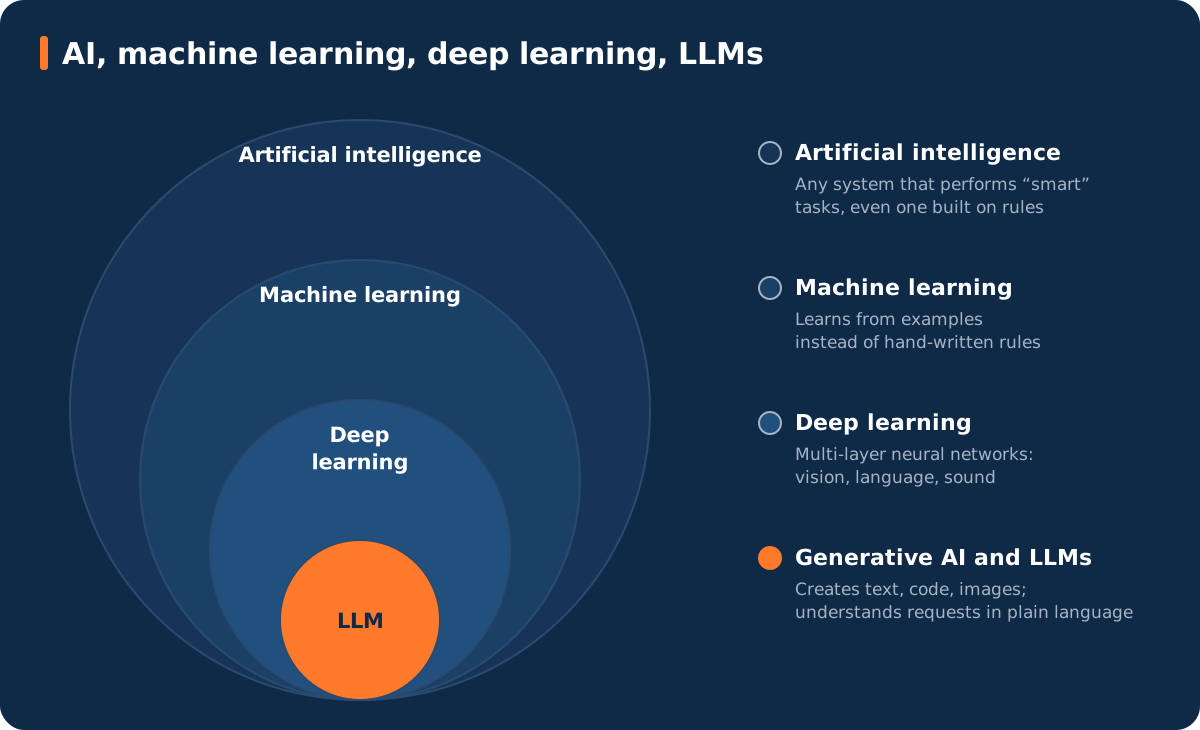
Artificial intelligence (AI) is an umbrella term for systems that perform tasks which normally require human thinking: recognize, predict, decide, put into words. It is a broad concept, and inside it are several narrower fields that people often mix up.
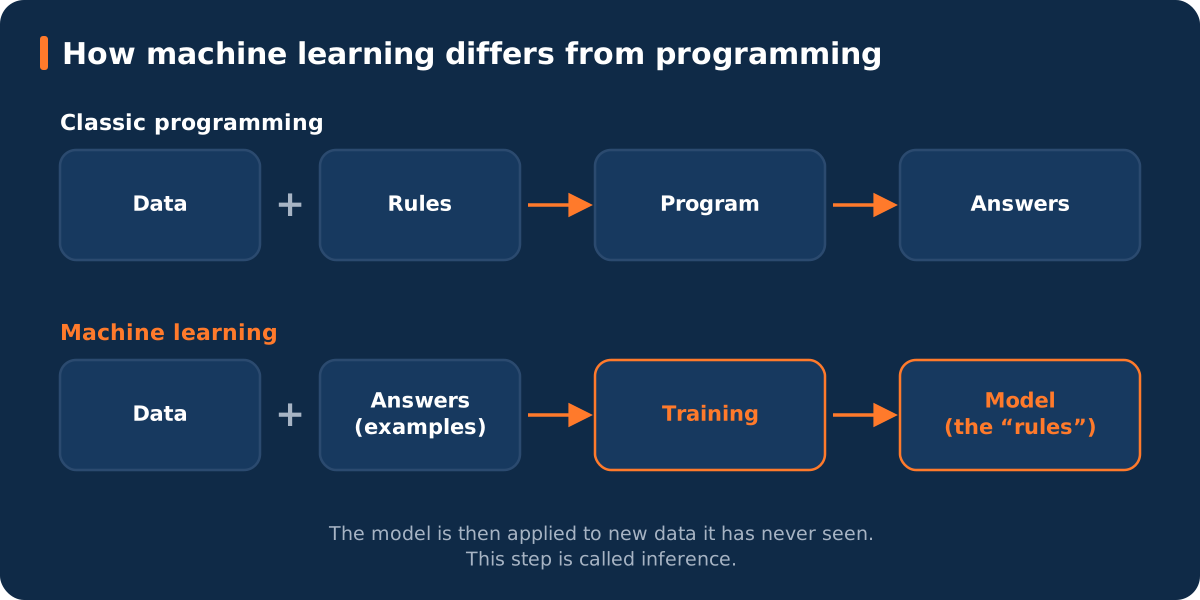
In classic programming a person writes the rules: “if the temperature is above 80 °C, turn on the fan.” The program takes data and produces an answer according to those rules.
But some tasks have rules that are impossible to write down. Try describing in words how to tell a cat from a dog in a photo: ears? They vary. Size? Same. In machine learning we give an algorithm thousands of examples together with the correct answers (“this is a cat,” “this is a dog”), and it works out its internal “rules” by itself. The result of training is called a model.
The model is then applied to new data it has never seen. This step is called inference. Training can take weeks on powerful servers; inference can take milliseconds on a small device.
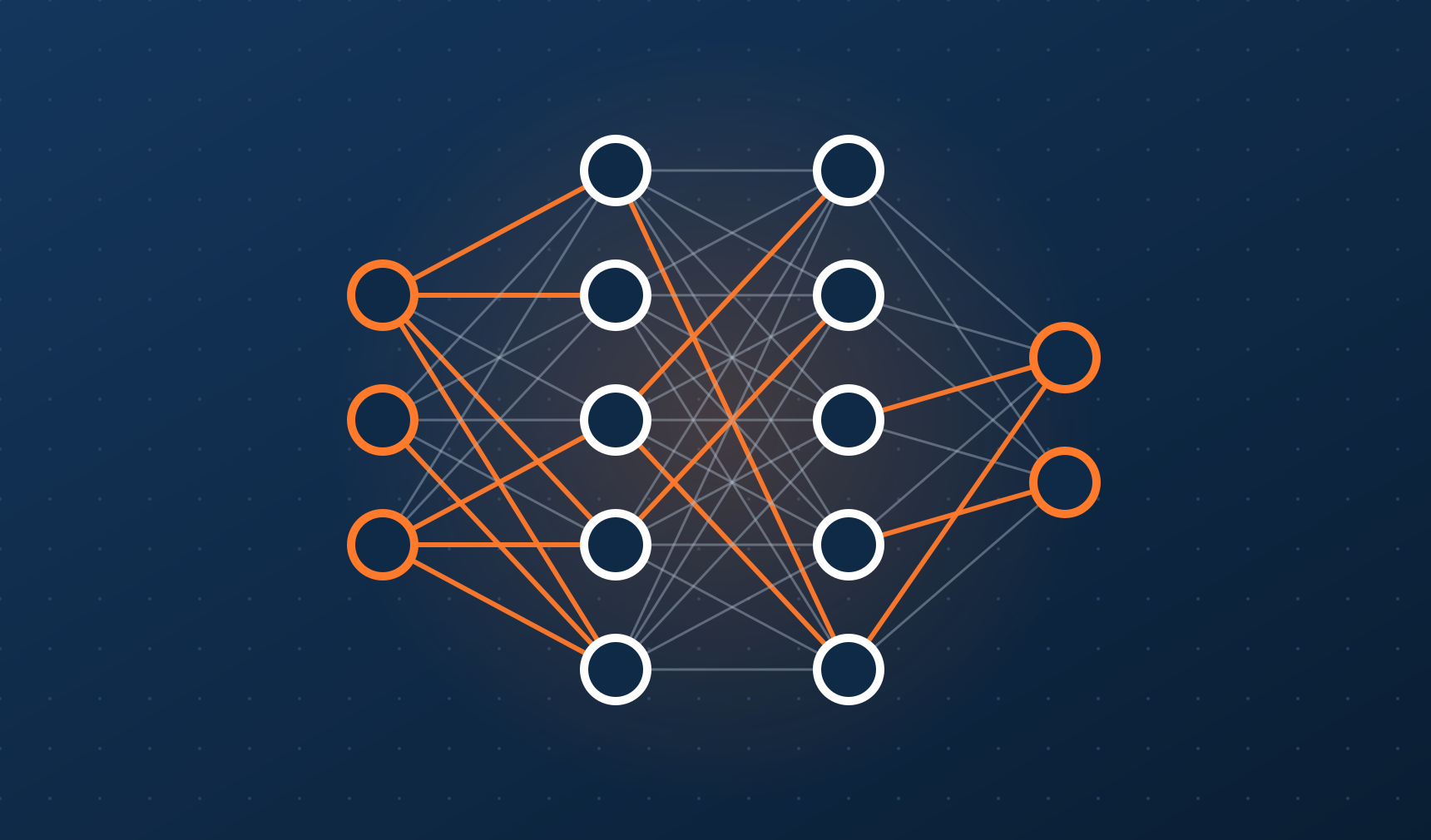
A neural network is a large number of simple computing units connected to each other. Each connection has a weight, a number that sets how strongly one unit influences another. At first the weights are random, and the network answers at random.
Training goes like this:
Repeat millions of times. Gradually the network learns to recognize features, from simple lines and blobs in the first layers to ears, eyes and faces in the deeper ones.
LLMs are trained on enormous amounts of text with a task that seems simple: predict the next word (more precisely, the next piece of a word, a token). To do this well, the model is forced to “learn” grammar, facts, reasoning and style. It is then further trained to be a helpful assistant: to follow instructions and answer questions.
This leads to an important limitation: the model generates plausible text; it doesn’t check facts. So it can confidently state something false, which is called hallucination. Modern systems partly counter this by searching documents and the web, but important answers still need to be checked.
The next step is agents: LLMs that don’t just reply with text but use tools. They run code, query databases, fill in documents and carry out multi-step tasks.
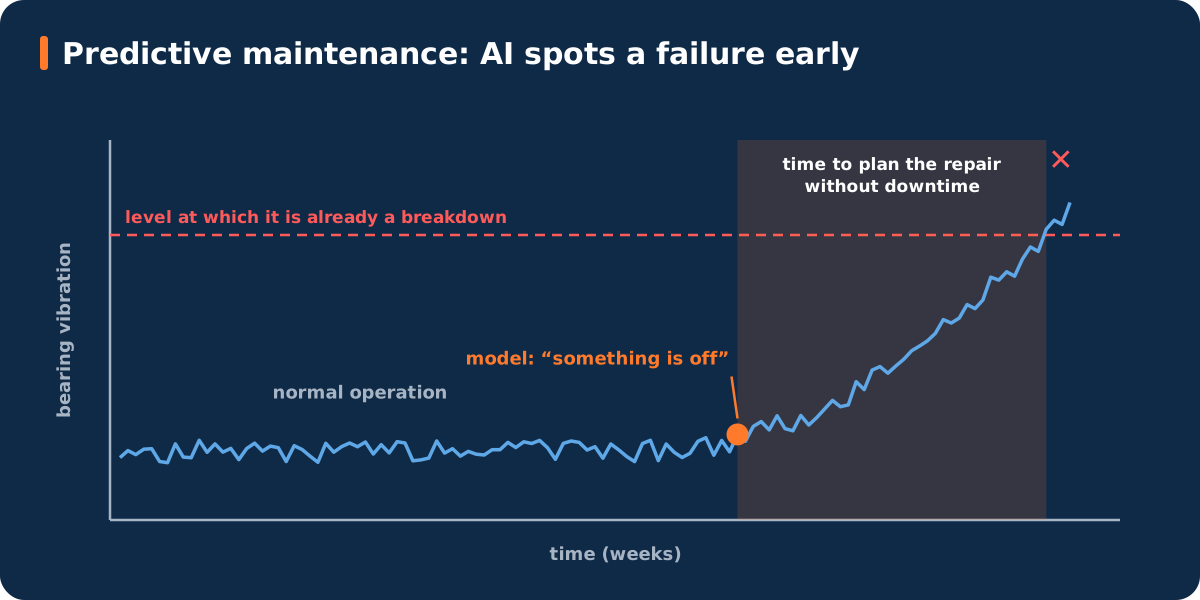
AI is neither magic nor a replacement for engineering; it is a new tool on top of it. It works best where there is good data, a clear task, and people who understand both the process and the model’s limits. In the next articles we will look at concrete examples.
Your phone unlocks when it sees your face. A camera in a factory spots a scratch on a part in a fraction of a second, …
In recent years Ukrainians have learned more about energy than they ever wanted to: outage schedules, generators outside …