Artificial intelligence: an introduction for beginners
In just a few years, artificial intelligence has gone from a topic for research conferences to a tool people use every …

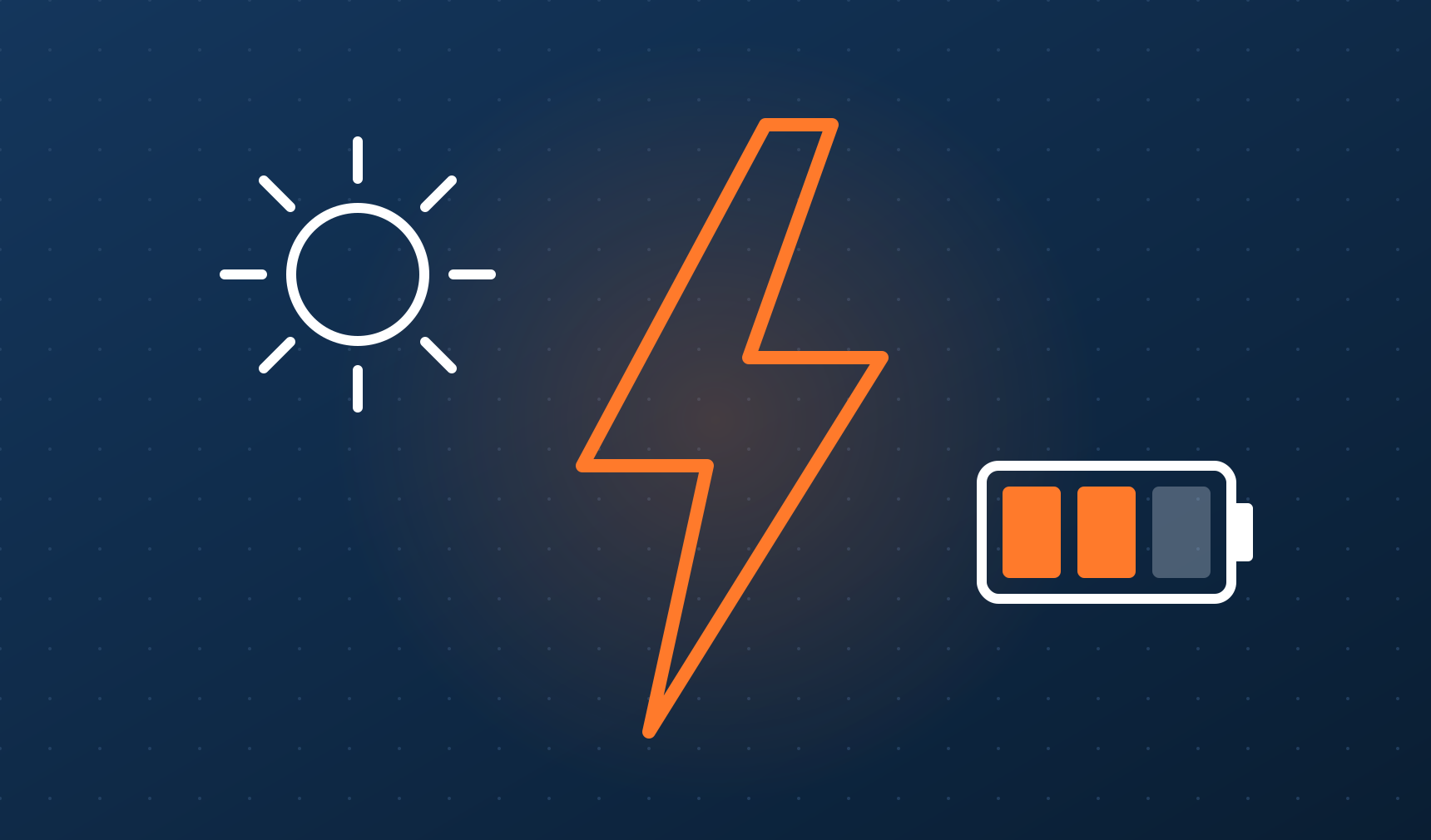
In recent years Ukrainians have learned more about energy than they ever wanted to: outage schedules, generators outside cafés, power banks in every bag. For a business the question is even sharper. Energy means a lot of money, the risk of production stopping and, more and more often, a requirement from EU partners. Energy management is about handling energy as systematically as you handle finance or quality. Let’s look at what it is made of.
Energy management is the systematic control of how much, when and from where a business gets its energy. Not a one-off swap of light bulbs, but an ongoing process: measure, find the losses, improve, check the result, repeat.
Energy management starts with metering. A single main meter at the entrance only shows the total. To understand where energy goes, you install submeters on individual shops, lines and compressors, and collect the data automatically.
Then you define:
Once the data is there, it usually turns out that most energy goes to a few things. In industry these are above all electric motors: pumps, fans, compressors, conveyors. By International Energy Agency estimates, motors use about two-thirds of industrial electricity. Then come heating, compressed air, lighting, ventilation and air conditioning.
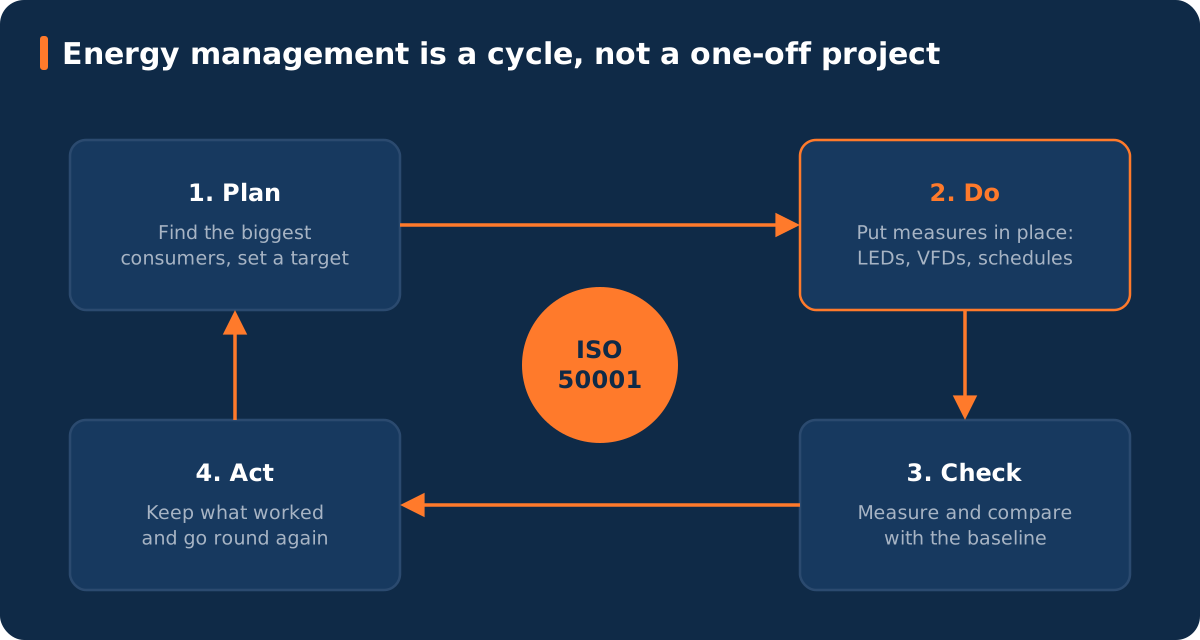
The international standard ISO 50001 describes an energy management system as an endless cycle:
Not everyone needs ISO 50001 certification, but the logic of the cycle is useful to any business, even a small one.
Some measures pay back within months:
Energy costs different amounts at different times. For businesses, not only kilowatt-hours matter but also peak power: exceeding the contracted capacity is expensive, and the grid may simply not cope.
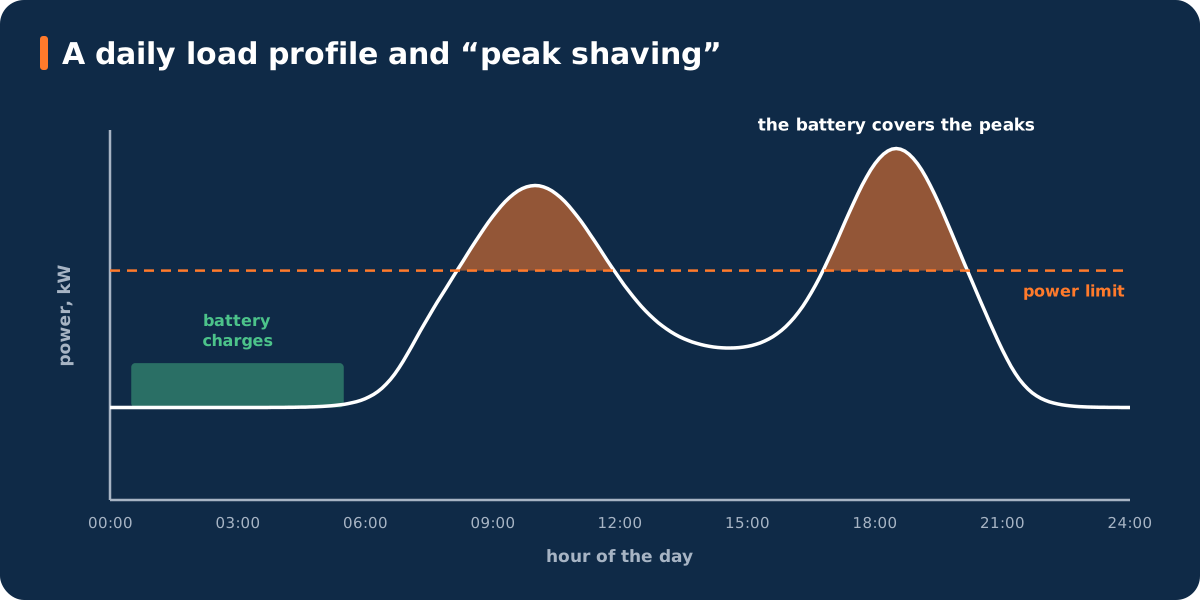
This is where energy storage systems (batteries) help: they charge when energy is plentiful or cheap and release it at the peak. Another tool is load shifting: moving energy-hungry operations to times when energy is cheaper or when your own solar panels are producing.
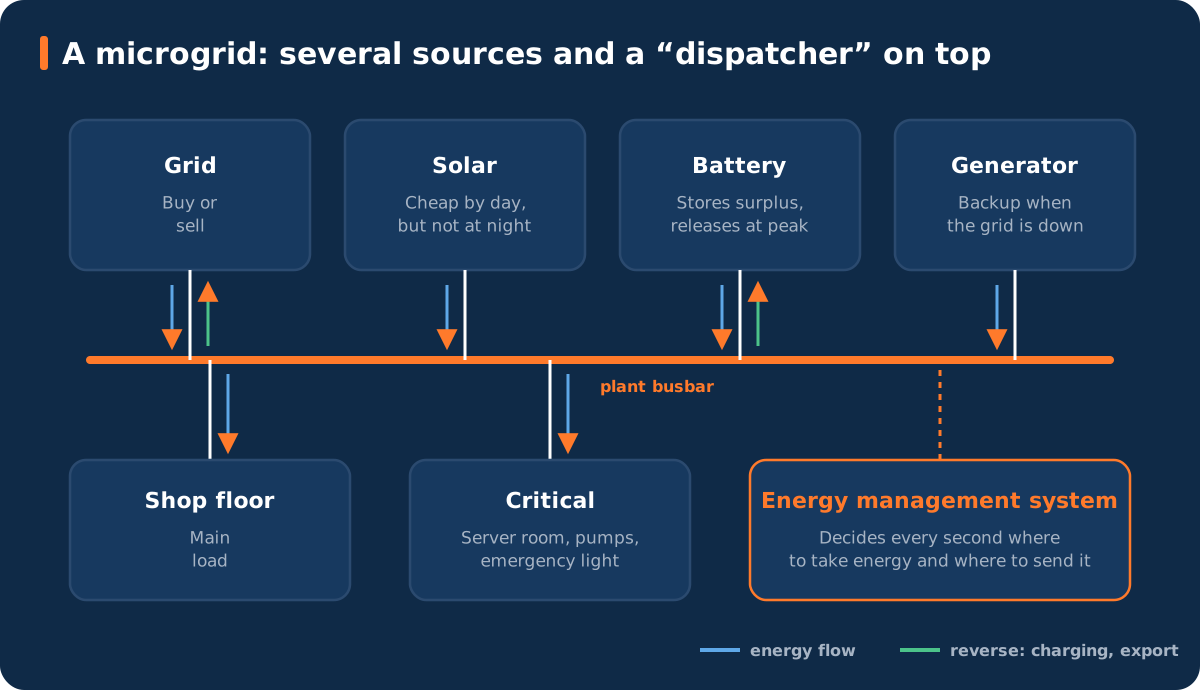
A microgrid is a group of energy sources and consumers that work as a single whole and can, when needed, disconnect from the main grid. Solar panels, a battery, a generator and the external grid are connected to a common busbar, and an energy management system (EMS) decides every second where to take energy from and where to send it.
When the external grid goes down, the microgrid switches to island mode and powers at least the critical loads. For Ukraine, where the power system is under constant attack, this is no longer exotic but a practical resilience tool. Microgrids will get their own articles in this section.
Energy management is closely tied to the other topics on this blog: automation collects the data, and energy management systems need solid cybersecurity. In the next articles we will look at microgrids and the IEC standards for them.
In just a few years, artificial intelligence has gone from a topic for research conferences to a tool people use every …
Your phone unlocks when it sees your face. A camera in a factory spots a scratch on a part in a fraction of a second, …